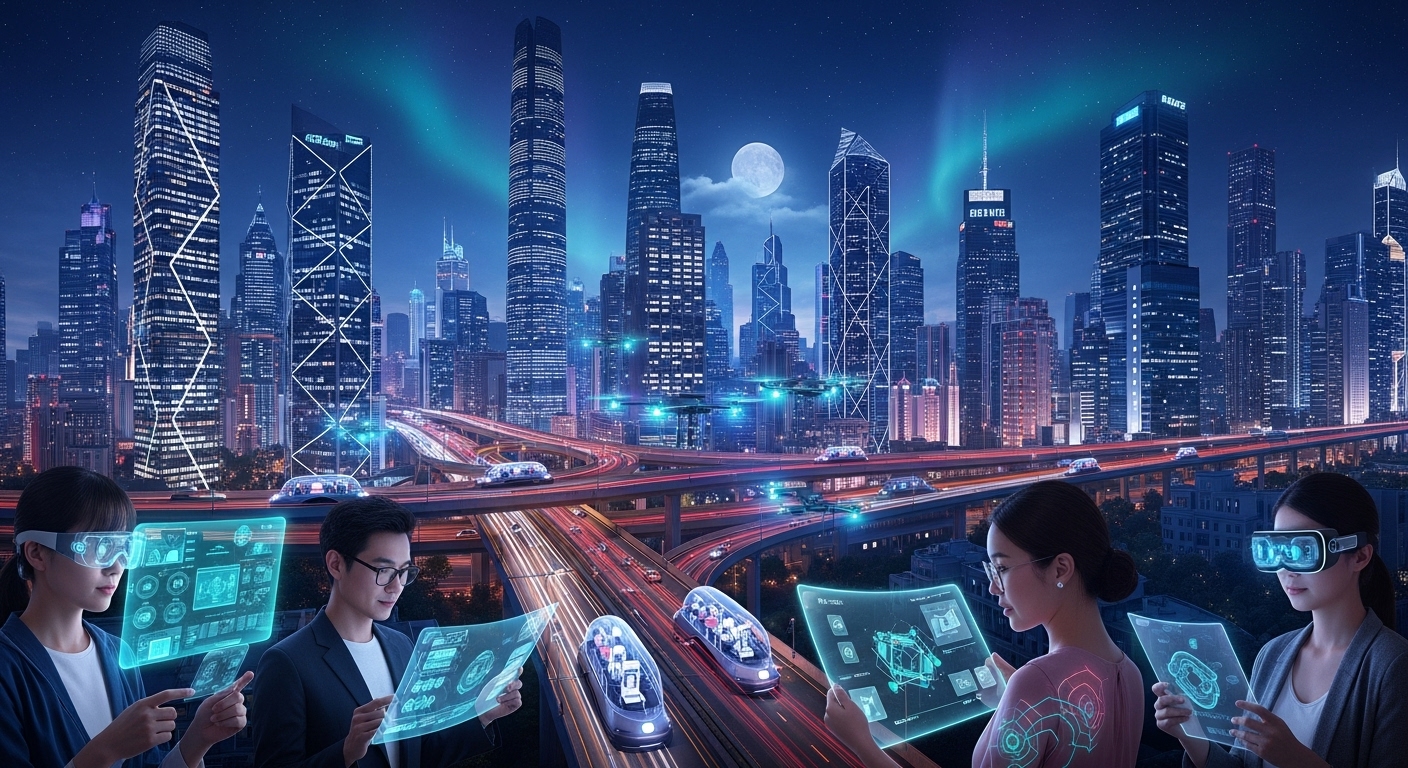

Technology is evolving at an exponential rate, transforming industries, businesses, and our daily lives in ways we never imagined. As we look to the future, it’s essential to understand the forces driving these changes, from artificial intelligence (AI) and the Internet of Things (IoT) to advancements in quantum computing and beyond. This blog explores the top emerging technologies that will dominate the landscape in the coming years, and how these innovations will redefine the way we live, work, and connect.
The Rise of Artificial Intelligence and Machine Learning
In recent years, Artificial Intelligence (AI) has transitioned from a theoretical concept to a practical reality. AI is already making its mark in fields such as healthcare, finance, manufacturing, and entertainment. From chatbots to autonomous vehicles, AI is creating new possibilities and revolutionizing how we approach problems.
Machine learning, a subset of AI, is particularly notable for its ability to improve through experience. With machine learning algorithms, systems can analyze vast amounts of data, identify patterns, and make decisions with little to no human intervention. For instance, AI-driven tools like recommendation engines on Netflix or Amazon use machine learning to analyze user behavior and personalize content.
Looking ahead, AI and machine learning will only grow in sophistication. We can expect more intelligent systems capable of handling complex tasks across a wide variety of industries. In healthcare, for instance, AI could assist doctors in diagnosing diseases by analyzing medical data faster and more accurately than any human could. In finance, AI could transform trading by predicting market trends with precision.
The Expansion of the Internet of Things (IoT)
The Internet of Things (IoT) refers to the network of physical devices—ranging from household appliances to industrial machines—that are connected to the internet and can communicate with one another. The IoT has already begun to change how we interact with the world around us, with smart homes, connected vehicles, and wearable health devices becoming increasingly common.
The potential of IoT is vast, and its applications extend far beyond the consumer market. In industries such as agriculture, IoT devices can be used to monitor soil conditions and crop health, allowing farmers to optimize yield. In manufacturing, IoT sensors can track equipment performance, enabling predictive maintenance and reducing downtime. Even in the energy sector, IoT can help monitor and manage energy usage more efficiently, leading to cost savings and sustainability.
As more devices become interconnected, the scope of IoT will continue to grow. By 2030, it’s predicted that there will be over 50 billion connected devices worldwide. The expansion of 5G networks will further accelerate the growth of IoT, enabling faster data transmission and creating new possibilities for IoT-enabled applications.
Quantum Computing: Unlocking New Frontiers of Computing Power
While quantum computing is still in its early stages, it promises to revolutionize industries that rely on immense computational power, such as cryptography, materials science, and drug discovery. Unlike classical computers, which use bits to represent information as 0s or 1s, quantum computers use quantum bits (qubits), which can exist in multiple states simultaneously. This gives quantum computers the ability to solve certain types of problems much faster than classical machines ever could.
For example, quantum computers could potentially solve complex problems in drug discovery by simulating molecular structures in a way that classical computers cannot. This could lead to breakthroughs in medicine and the development of new treatments. In cybersecurity, quantum computers could eventually break traditional encryption methods, prompting the need for more advanced quantum-resistant encryption techniques.
The road to practical quantum computing is still long, with many technical challenges to overcome. However, with major players like Google, IBM, and Intel investing heavily in quantum research, we are likely to see significant advancements in the coming decade. The impact of quantum computing could be as transformative as the invention of the classical computer itself.
Blockchain Beyond Cryptocurrencies
When most people think of blockchain, they think of Bitcoin and other cryptocurrencies. While blockchain technology is indeed the backbone of digital currencies, its potential goes far beyond financial applications. Blockchain is essentially a decentralized, distributed ledger that ensures transparency, security, and immutability of data.
One of the most promising applications of blockchain is in supply chain management. With blockchain, businesses can track products from the moment they are created to the point they reach the consumer. This level of transparency helps reduce fraud, ensure product quality, and improve efficiency in supply chains. In industries like food safety, pharmaceuticals, and luxury goods, blockchain could play a crucial role in verifying the authenticity and safety of products.
Blockchain also has the potential to transform digital identity management. By allowing individuals to control their personal data and verify their identity without relying on centralized entities, blockchain could offer a more secure and private alternative to traditional systems. This could lead to safer online experiences and a reduction in identity theft.
As blockchain technology matures, we are likely to see more widespread adoption across various industries. From finance and healthcare to real estate and voting systems, blockchain’s applications are virtually limitless.
5G and the Future of Connectivity
The rollout of 5G networks is poised to unlock new possibilities for technology. 5G offers much faster data speeds, lower latency, and the ability to support a vast number of connected devices simultaneously. These improvements will enable innovations in areas like autonomous vehicles, augmented reality (AR), and virtual reality (VR).
Autonomous vehicles, for example, rely on real-time data from sensors and external sources to navigate safely. With 5G’s low latency and high-speed capabilities, these vehicles will be able to process data more quickly and make faster decisions, which could significantly improve their safety and efficiency.
In the realm of AR and VR, 5G’s high bandwidth will enable seamless, immersive experiences with minimal lag. This will revolutionize industries like gaming, entertainment, education, and healthcare. Imagine a future where medical professionals can perform remote surgeries using AR and VR, or where students can experience history through fully interactive virtual environments.
5G will also play a crucial role in the expansion of IoT. With more connected devices generating vast amounts of data, 5G’s ability to support a high volume of connections will be essential for realizing the full potential of IoT.
The Impact of Biotechnology and Genomics
Biotechnology and genomics are advancing at an unprecedented pace, and these fields hold immense promise for the future. In medicine, for example, advancements in gene editing technologies like CRISPR could lead to treatments for genetic disorders that were once considered incurable. Additionally, personalized medicine, which tailors treatments to an individual’s genetic makeup, is becoming more feasible thanks to genomic research.
In agriculture, biotechnology is already being used to develop crops that are resistant to pests, diseases, and environmental stress. This could help address food security issues in the face of a growing global population and changing climate.
Furthermore, the convergence of biotechnology with AI and machine learning could accelerate the discovery of new drugs and therapies. By analyzing vast amounts of genetic data, AI can identify patterns that may lead to breakthroughs in treatment for diseases like cancer, Alzheimer’s, and more.
Ethical Considerations and Challenges
As technology advances, it brings with it a host of ethical considerations. Issues such as data privacy, cybersecurity, and the potential for job displacement due to automation must be addressed to ensure that these technologies are developed and used responsibly.
For instance, as AI becomes more powerful, it raises questions about privacy and surveillance. How can we balance the benefits of AI with the need to protect individual rights and freedoms? Similarly, the rise of automation and robotics in industries like manufacturing and logistics may lead to job losses, requiring workers to adapt and reskill for new roles.
Governments, businesses, and individuals will need to collaborate to ensure that the future of technology is inclusive, ethical, and beneficial to all. This will require thoughtful policy-making, regulation, and ongoing dialogue about the social impact of emerging technologies.
Conclusion
The technological landscape is evolving rapidly, and the innovations of today will shape the world of tomorrow. Artificial intelligence, the Internet of Things, quantum computing, blockchain, 5G, biotechnology, and genomics are just a few of the transformative technologies that will redefine industries and our daily lives in the years ahead.
While these advancements hold incredible promise, they also bring with them challenges and ethical considerations that must be addressed. As we move forward into this new era, it’s essential that we navigate these changes thoughtfully and responsibly, ensuring that the benefits of technology are felt by all, while minimizing potential risks.
The future of technology is not just about new gadgets or more powerful computers; it’s about creating a world where innovation drives progress, improves lives, and helps solve some of the most pressing challenges facing humanity. The question is no longer whether these changes will happen, but how we will adapt to them and shape their future for the better.