
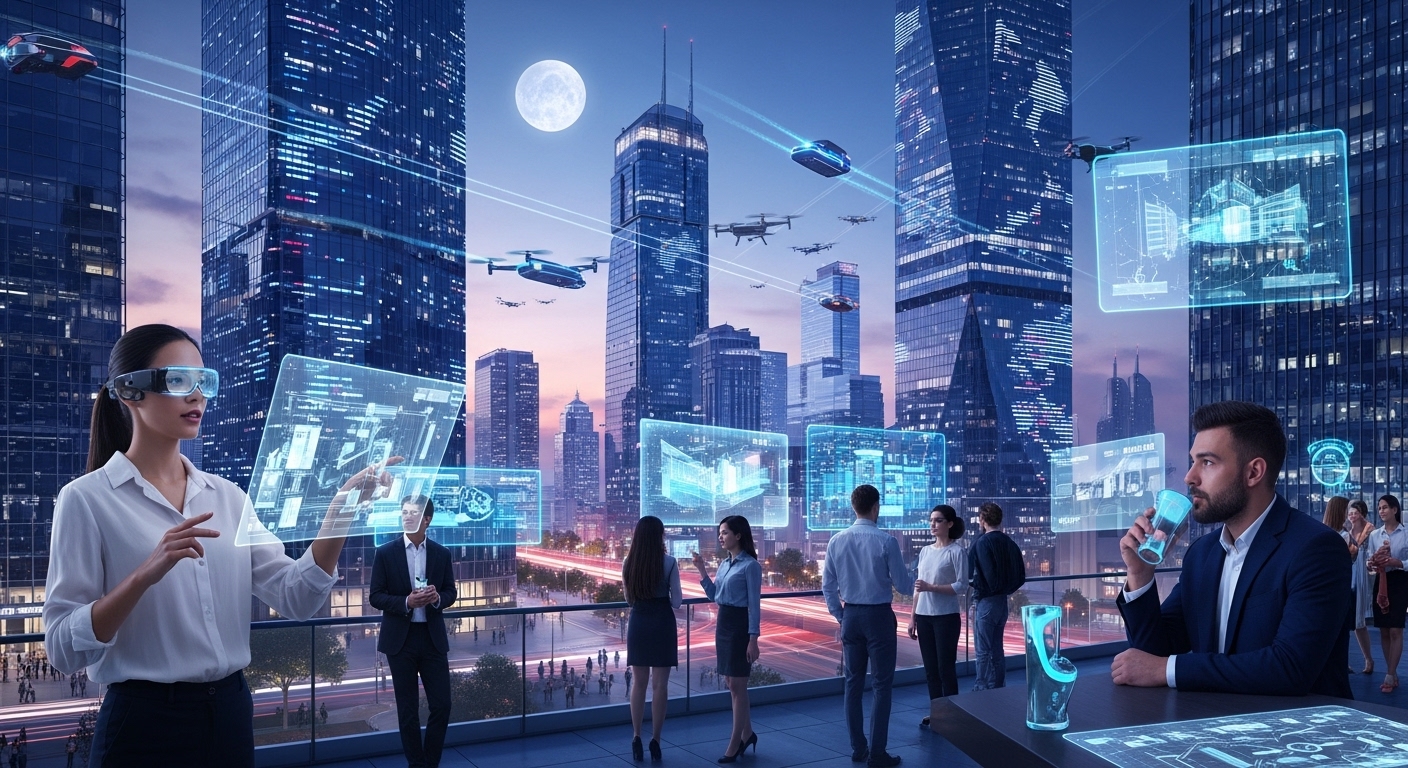
The world is evolving at an unprecedented pace, and technology plays a central role in shaping this transformation. Over the past few decades, we’ve witnessed breakthroughs in computing, communication, and artificial intelligence that have changed not only the way we live but also how we work, interact, and experience the world. As we stand on the brink of a new technological era, it’s essential to understand the innovations driving this change and their potential implications for the future. In this blog post, we will explore some of the most exciting technological advancements on the horizon, from AI and quantum computing to renewable energy solutions and the Internet of Things (IoT), and consider how these innovations will impact our lives.
The Power of Artificial Intelligence: Revolutionizing Industries and Everyday Life
Artificial Intelligence (AI) is one of the most transformative technologies of the 21st century. Over the past few years, AI has moved from being a theoretical concept to a tangible force with real-world applications across various sectors. From self-driving cars and medical diagnostics to personalized recommendations on social media, AI is becoming an integral part of our daily lives.
One of the key advancements in AI is machine learning, a subset of AI that enables machines to learn from data without being explicitly programmed. Machine learning algorithms can identify patterns and make predictions, which has proven invaluable in industries such as healthcare, finance, and e-commerce. In healthcare, for example, AI systems are now being used to analyze medical images and detect early signs of diseases such as cancer with accuracy comparable to or even exceeding that of human doctors. In finance, AI is used to predict stock market trends and detect fraudulent activities, while in e-commerce, it helps tailor personalized shopping experiences based on consumer behavior.
Looking forward, AI holds the potential to drive even more significant breakthroughs. In the field of autonomous vehicles, for instance, AI is expected to revolutionize transportation by enabling cars, trucks, and drones to operate without human intervention. The increased use of AI-powered systems in industries like logistics, customer service, and even creative fields like music and art will continue to disrupt traditional job roles while creating new opportunities in emerging fields.
Despite the exciting possibilities, AI also raises concerns. Questions about privacy, bias in algorithms, and the potential for job displacement are crucial challenges that must be addressed as AI becomes more integrated into society. Striking a balance between innovation and ethical considerations will be essential as we move forward with AI development.
Quantum Computing: The Next Frontier in Processing Power
While AI is transforming the way we interact with data, another groundbreaking technology—quantum computing—has the potential to revolutionize the very nature of computation itself. Unlike classical computers, which process data in binary form (0s and 1s), quantum computers use quantum bits or qubits, which can exist in multiple states at once. This allows quantum computers to perform complex calculations exponentially faster than their classical counterparts.
The potential applications of quantum computing are vast. In fields such as cryptography, quantum computers could break traditional encryption methods, leading to the development of more secure forms of digital communication. In medicine, quantum computing could enable faster drug discovery by simulating molecular interactions at a scale and speed that is impossible for classical computers. Quantum algorithms could also solve complex optimization problems that are beyond the reach of current computational methods, with applications in logistics, finance, and climate modeling.
While quantum computing holds immense promise, we are still in the early stages of its development. Building practical, stable quantum computers is a monumental challenge, and there are significant technical hurdles to overcome. However, major tech companies like IBM, Google, and Microsoft are already investing heavily in quantum research, and the next few decades could see quantum computing move from theory to practical application, with profound implications for industries and society as a whole.
The Internet of Things (IoT): A More Connected World
The Internet of Things (IoT) refers to the growing network of physical devices—ranging from smartphones and wearables to home appliances and industrial machines—that are connected to the internet and can communicate with one another. IoT has already begun transforming industries such as healthcare, agriculture, manufacturing, and transportation, and its impact is expected to deepen in the coming years.
In the healthcare sector, IoT devices such as wearable health trackers and smart medical equipment allow for continuous monitoring of patients’ vital signs, making it easier to detect potential health issues before they become serious. In agriculture, IoT sensors are being used to monitor soil moisture levels, weather conditions, and crop health, enabling more efficient farming practices and reducing waste. In manufacturing, IoT-enabled machines can track their own performance, detect faults, and automatically request maintenance, leading to greater efficiency and reduced downtime.
Perhaps the most exciting aspect of IoT is its potential to make entire cities smarter. Smart cities use IoT technology to optimize public services such as traffic management, waste disposal, and energy usage. For example, smart traffic lights can adjust their timing in real-time based on traffic flow, reducing congestion and pollution. Similarly, IoT-enabled buildings can monitor energy consumption and adjust heating, cooling, and lighting to improve energy efficiency.
However, the widespread adoption of IoT also brings challenges, particularly in terms of cybersecurity and data privacy. As more devices become interconnected, the risk of cyberattacks increases, potentially compromising sensitive data and disrupting critical infrastructure. Ensuring the security and privacy of IoT systems will be a critical priority as the technology continues to evolve.
The Promise of Renewable Energy: Powering a Sustainable Future
As the global population grows and industrialization continues, the demand for energy has skyrocketed, placing immense pressure on the environment. Fossil fuels have long been the dominant source of energy, but their negative impact on the planet—through air pollution and greenhouse gas emissions—has driven the search for cleaner, more sustainable energy solutions. Enter renewable energy technologies.
Solar and wind power are the most well-known renewable energy sources, and they have seen rapid advancements in recent years. Solar panels have become more efficient and affordable, making it possible for individuals and businesses to harness the sun’s energy. Wind turbines have also become more powerful, capable of generating large amounts of electricity with minimal environmental impact. In addition to solar and wind, other renewable energy sources such as geothermal, hydroelectric, and tidal energy are playing an increasingly important role in diversifying the global energy mix.
The future of renewable energy looks promising, with continued advancements in energy storage, grid infrastructure, and energy efficiency. The development of next-generation batteries, for example, will make it easier to store excess energy generated from renewable sources and use it when needed, solving one of the major challenges of renewable energy: its intermittency. In addition, smart grids, which use advanced communication and control technologies to optimize energy distribution, will make it easier to integrate renewable energy into existing power systems.
The transition to renewable energy is not without its challenges, however. In many regions, fossil fuels are still heavily subsidized, and infrastructure for renewable energy remains underdeveloped. Moreover, there are concerns about the environmental impact of manufacturing and disposing of renewable energy technologies, such as solar panels and wind turbines. Nevertheless, the growing global demand for clean energy solutions and the ongoing advancement of renewable technologies suggest that the future of energy will be both cleaner and more sustainable.
Biotechnology and Healthcare: Advancements in Personalized Medicine
Biotechnology has made tremendous strides in recent years, with innovations in genetic engineering, gene therapy, and molecular biology offering the potential to revolutionize healthcare. One of the most exciting developments in biotechnology is personalized medicine, which tailors medical treatments to individual patients based on their genetic makeup, lifestyle, and environmental factors.
Advancements in genomic sequencing have made it possible to decode an individual’s DNA more quickly and affordably than ever before. This allows for more precise diagnosis and treatment of diseases, as doctors can identify genetic mutations that may predispose a person to certain conditions, such as cancer or heart disease. In addition to genetic testing, personalized medicine also incorporates other factors such as diet, exercise, and exposure to environmental toxins, providing a holistic approach to health and wellness.
Gene editing technologies like CRISPR are further pushing the boundaries of personalized medicine. CRISPR allows scientists to make precise edits to the DNA of living organisms, opening up possibilities for curing genetic disorders, improving agricultural practices, and even enhancing human abilities. While gene editing holds immense promise, it also raises ethical concerns about the potential for “designer babies” and the long-term effects of altering the human genome.
Biotechnology also has the potential to revolutionize the treatment of diseases. For example, immunotherapy is a promising new treatment for cancer that harnesses the power of the immune system to fight tumors. Additionally, advances in regenerative medicine, such as stem cell therapy, could enable the regeneration of damaged tissues and organs, offering new hope for patients with conditions that are currently considered incurable.
The Future of Space Exploration: Reaching New Frontiers
Space exploration has been one of humanity’s most ambitious endeavors, and in recent years, there has been renewed interest in exploring the cosmos. With advances in rocket technology, private space companies like SpaceX and Blue Origin are making it possible to send humans and payloads into space more frequently and at a lower cost than ever before.
One of the most exciting prospects for the future of space exploration is the potential for human settlement on other planets. NASA, along with private companies, is working on missions to the Moon, Mars, and beyond. In 2020, NASA’s Perseverance rover successfully landed on Mars, marking a significant milestone in our ability to explore and study the Red Planet. Future missions could pave the way for human colonies on Mars, which would mark a major leap forward in humanity’s ability to live beyond Earth.
In addition to human exploration, space-based technologies are already transforming life on Earth. Satellite communications, weather forecasting, and GPS navigation rely on a vast network of satellites orbiting our planet. Advances in space technology could lead to better monitoring of climate change, more efficient resource management, and improved global communications.