
Introduction
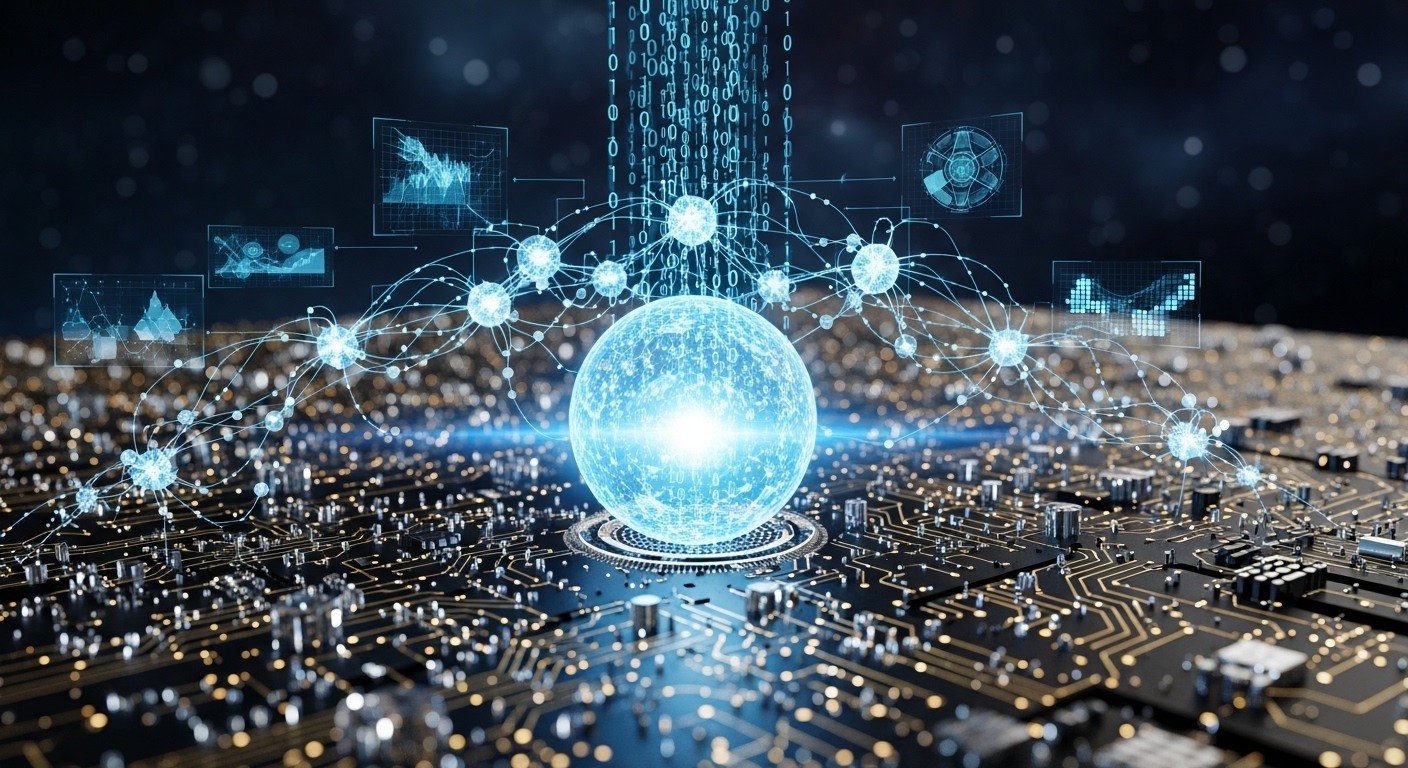
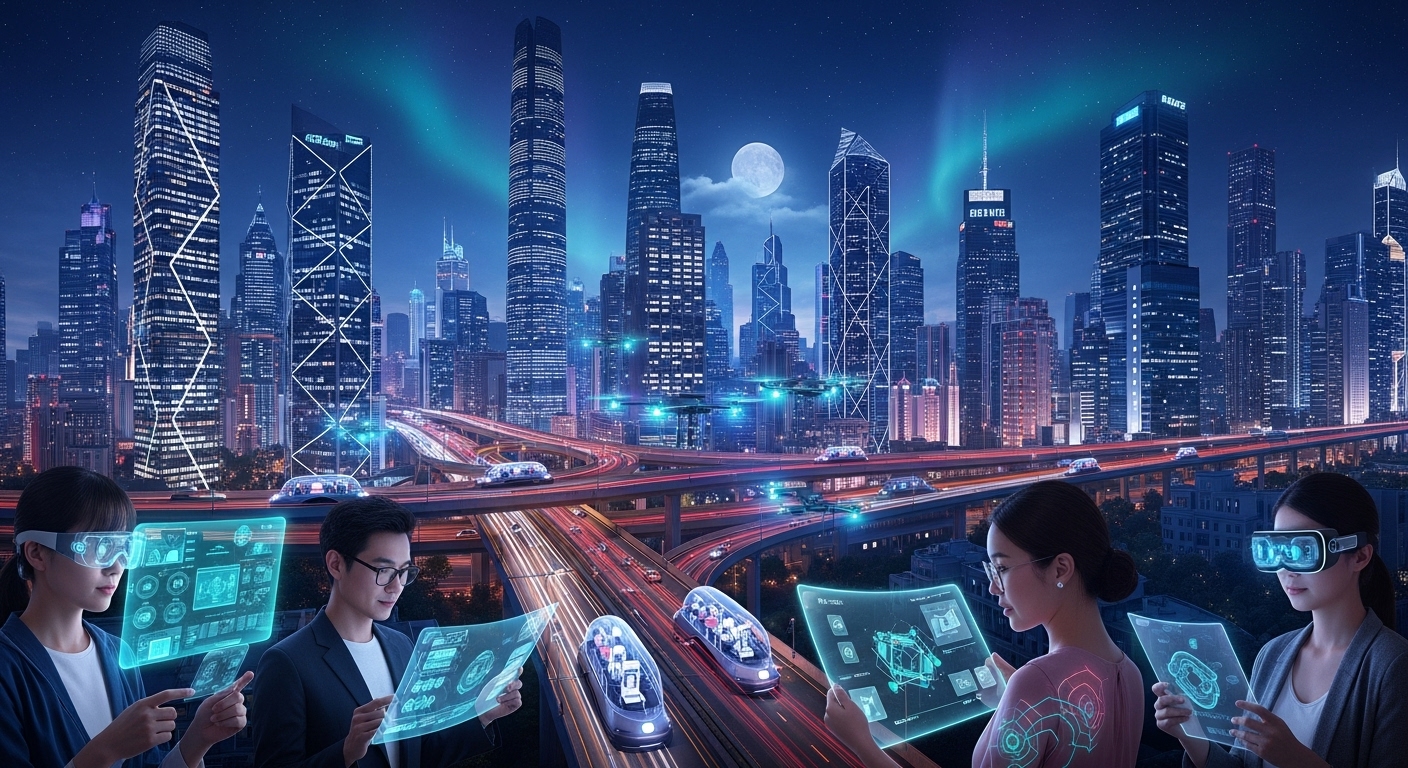
Technology has become the backbone of modern civilization, influencing every sector from education and healthcare to entertainment and business. What once started as simple inventions to make life easier has evolved into a global force shaping how we live, work, and connect. The digital revolution has transformed our world into a hyper-connected, intelligent, and data-driven society. Whether it is artificial intelligence, robotics, or the Internet of Things, technology continues to reshape the boundaries of what is possible. This blog explores how technology is changing human life, driving global development, and creating a vision of a smarter and more sustainable future.
The Evolution of Technology
The story of technology is a story of human progress. From the invention of the wheel to the rise of the Internet, every innovation has marked a new chapter in human history. Early humans created basic tools to survive, while the Industrial Revolution introduced machinery that accelerated production and trade. The twentieth century brought about one of the greatest leaps in human development—the birth of computers and digital communication.
Today, technology has reached an era where intelligence is built into machines. We are surrounded by smart devices that can learn, predict, and adapt to our needs. The evolution of technology reflects not just the advancement of tools but also the growth of human creativity and problem-solving. It shows our constant desire to explore, improve, and innovate.
The Digital Transformation of Society
Digital transformation refers to the integration of technology into all aspects of daily life. From online shopping to smart homes, technology has simplified many tasks that once required time and effort. Digital payment systems have reduced the need for cash transactions, while online education allows students to learn from anywhere in the world. Even governments are using digital platforms to provide public services more efficiently.
This transformation has also influenced how people interact socially. Social media platforms allow individuals to express themselves, build communities, and share ideas. However, it has also introduced challenges such as misinformation, privacy concerns, and digital addiction. As society becomes more connected, there is a growing need to ensure that technology is used responsibly and ethically.
Artificial Intelligence and the Power of Automation
Artificial Intelligence (AI) is perhaps the most revolutionary innovation of our time. It gives machines the ability to think, analyze, and make decisions, much like humans. AI is already transforming industries across the globe. In healthcare, it assists doctors in diagnosing diseases. In finance, it detects fraudulent transactions. In transportation, it enables the development of autonomous vehicles.
Automation powered by AI has also changed how businesses operate. Repetitive tasks are now handled by machines, allowing humans to focus on creativity, innovation, and strategic thinking. However, the rise of automation has sparked debates about job security and the need for new skills. To thrive in an AI-driven world, workers must adapt by embracing digital learning and developing critical thinking abilities.
The Role of Technology in Education
Education is one of the sectors most transformed by technology. The traditional classroom model is evolving into a hybrid system that combines physical and digital learning. Interactive learning platforms, digital textbooks, and online assessments have made education more flexible and accessible. Students from remote regions can now access world-class education through digital platforms.
Teachers are also using technology to create engaging lessons through multimedia presentations, simulations, and virtual reality. Artificial Intelligence in education is helping to personalize learning, identify student strengths and weaknesses, and recommend resources for improvement. While technology enhances education, it is equally important to ensure that students develop social skills and emotional intelligence alongside digital literacy.
Technology in Healthcare: A Lifesaving Revolution
The healthcare industry has greatly benefited from technological innovation. From electronic health records to telemedicine, technology has made medical care more efficient and accessible. Patients can now consult doctors remotely through video calls, reducing the need for hospital visits.
Artificial Intelligence and machine learning are revolutionizing diagnostics by detecting patterns that humans might miss. Wearable devices such as smartwatches track vital signs and alert users to potential health risks. Robotic surgeries allow doctors to perform procedures with greater precision, reducing recovery times.
Moreover, advancements in biotechnology are paving the way for personalized medicine, where treatments are tailored to an individual’s genetic makeup. Technology is not only saving lives but also improving the quality of healthcare worldwide.
The Rise of the Internet of Things (IoT)
The Internet of Things (IoT) connects everyday objects to the Internet, enabling them to send and receive data. This network of smart devices is changing how people interact with their environment. In homes, IoT enables automation—lights, thermostats, and appliances can be controlled remotely using smartphones.
In industries, IoT systems track machinery performance, predict maintenance needs, and improve efficiency. In agriculture, sensors monitor soil and weather conditions to help farmers optimize crop yields. In cities, IoT technology is creating smart infrastructure that reduces energy consumption and improves public safety.
The power of IoT lies in its ability to collect and analyze data, turning information into actionable insights. However, with increased connectivity comes the challenge of cybersecurity, as every connected device becomes a potential target for hackers.
Cloud Computing and Data Storage
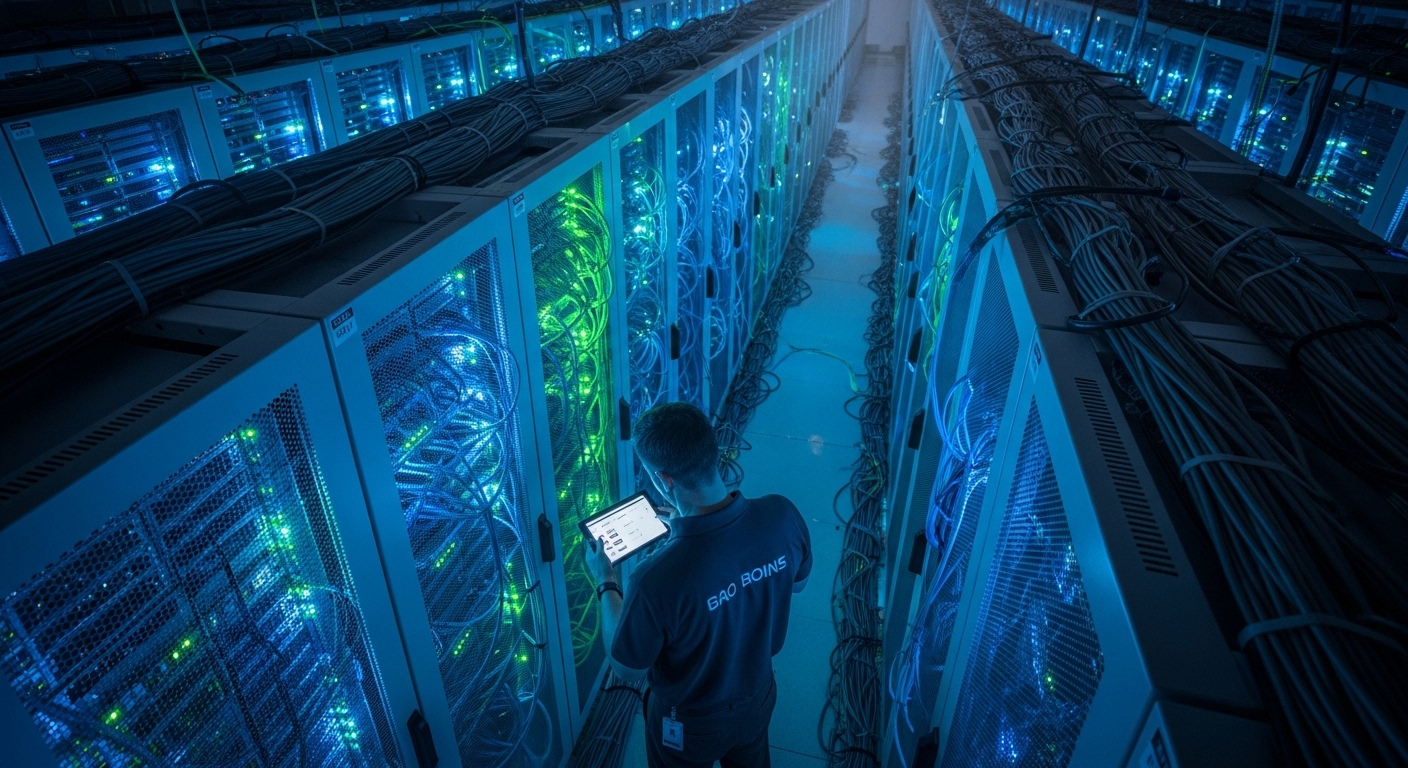
As the world generates massive amounts of data, cloud computing has become essential. It allows individuals and organizations to store, access, and process data over the Internet rather than relying on physical servers. Cloud services provide flexibility, scalability, and cost efficiency.
Businesses use cloud platforms to host applications, manage customer data, and collaborate in real-time. For individuals, cloud storage makes it easier to access files from any device. Cloud technology has also become the foundation of remote work, enabling employees to stay productive from anywhere.
However, reliance on cloud systems requires strong data protection policies. Ensuring data privacy and compliance with regulations is a top priority in a world where information is a valuable asset.
Cybersecurity: Protecting the Digital Frontier
As digital dependency grows, so does the threat of cybercrime. Cybersecurity has become one of the most critical aspects of technology. Hackers and malicious actors constantly seek to exploit vulnerabilities in systems, stealing data and disrupting operations.
Organizations invest heavily in cybersecurity measures such as firewalls, encryption, and multi-factor authentication to protect sensitive information. Artificial Intelligence is now being used to detect and prevent cyber threats in real time. However, users also play a vital role in maintaining cybersecurity by practicing safe online habits and staying informed about digital risks.
In the modern world, cybersecurity is not just about protecting data; it is about protecting trust. A secure digital environment ensures that individuals and businesses can use technology with confidence.
Technology and the Global Economy
Technology has become the driving force of the global economy. Digital innovation creates new industries, markets, and job opportunities. The rise of e-commerce, fintech, and digital marketing has transformed how businesses operate and how consumers interact with brands.
Startups and entrepreneurs are leveraging technology to develop creative solutions that address real-world problems. Automation and artificial intelligence have increased productivity, while digital currencies and blockchain are redefining financial systems. However, economic growth through technology also requires digital inclusion—ensuring that everyone has access to the tools and skills needed to participate in the digital economy.
Environmental Impact and Sustainable Technology
While technology drives growth, it also affects the environment. Electronic waste, energy consumption, and resource extraction contribute to pollution and climate change. However, sustainable technology offers hope. Green innovations such as renewable energy, electric vehicles, and eco-friendly manufacturing are reducing humanity’s carbon footprint.
Smart technologies monitor energy usage and promote conservation. In agriculture, precision farming reduces water and fertilizer waste. Even in construction, sustainable materials and 3D printing are helping to build eco-friendly structures. The future of technology must be aligned with environmental sustainability to ensure that progress does not come at the cost of the planet.
Virtual Reality and Augmented Reality: The New Dimensions of Experience
Virtual Reality (VR) and Augmented Reality (AR) are changing how people experience the world. VR creates fully immersive digital environments, while AR overlays digital elements onto the real world. These technologies are widely used in gaming, entertainment, education, and healthcare.
In education, VR allows students to explore historical events or scientific concepts in interactive ways. In healthcare, AR assists surgeons by providing real-time data during operations. In architecture and design, these technologies enable virtual walkthroughs of projects before construction begins. The blend of the physical and digital worlds represents a new frontier for creativity and human interaction.
The Future of Transportation Technology
Transportation is undergoing a major transformation thanks to technological advancement. Electric vehicles, autonomous driving, and smart traffic systems are redefining mobility. Electric cars reduce emissions, while self-driving vehicles promise safer and more efficient travel.
Smart transportation systems use data and AI to optimize traffic flow, reduce congestion, and improve fuel efficiency. Even public transportation is becoming more advanced with contactless payments and real-time tracking. The future of mobility will not only be faster but also greener, emphasizing sustainability and efficiency.
Ethical Considerations in Technological Advancement
With great innovation comes great responsibility. As technology becomes more powerful, ethical concerns grow. Issues such as data privacy, surveillance, job automation, and digital inequality require careful attention. Artificial Intelligence decisions must be transparent and fair to prevent bias and misuse.
Governments, companies, and individuals must work together to ensure that technology serves humanity’s best interests. Ethical guidelines, digital literacy, and global cooperation are essential to maintaining trust and fairness in a tech-driven world.
Conclusion
Technology is more than just a collection of tools—it is a reflection of human progress, creativity, and ambition. From the simplest inventions to the most complex artificial intelligence systems, technology continues to redefine how people live and interact. It has the power to solve the world’s most pressing problems, but it also demands responsibility, awareness, and balance.
The future of technology lies not only in innovation but also in how it is used. If guided by ethics, sustainability, and inclusivity, technology will continue to empower humanity and create a brighter, smarter, and more connected world. The digital revolution is not a distant dream—it is the present reality shaping the destiny of generations to come.