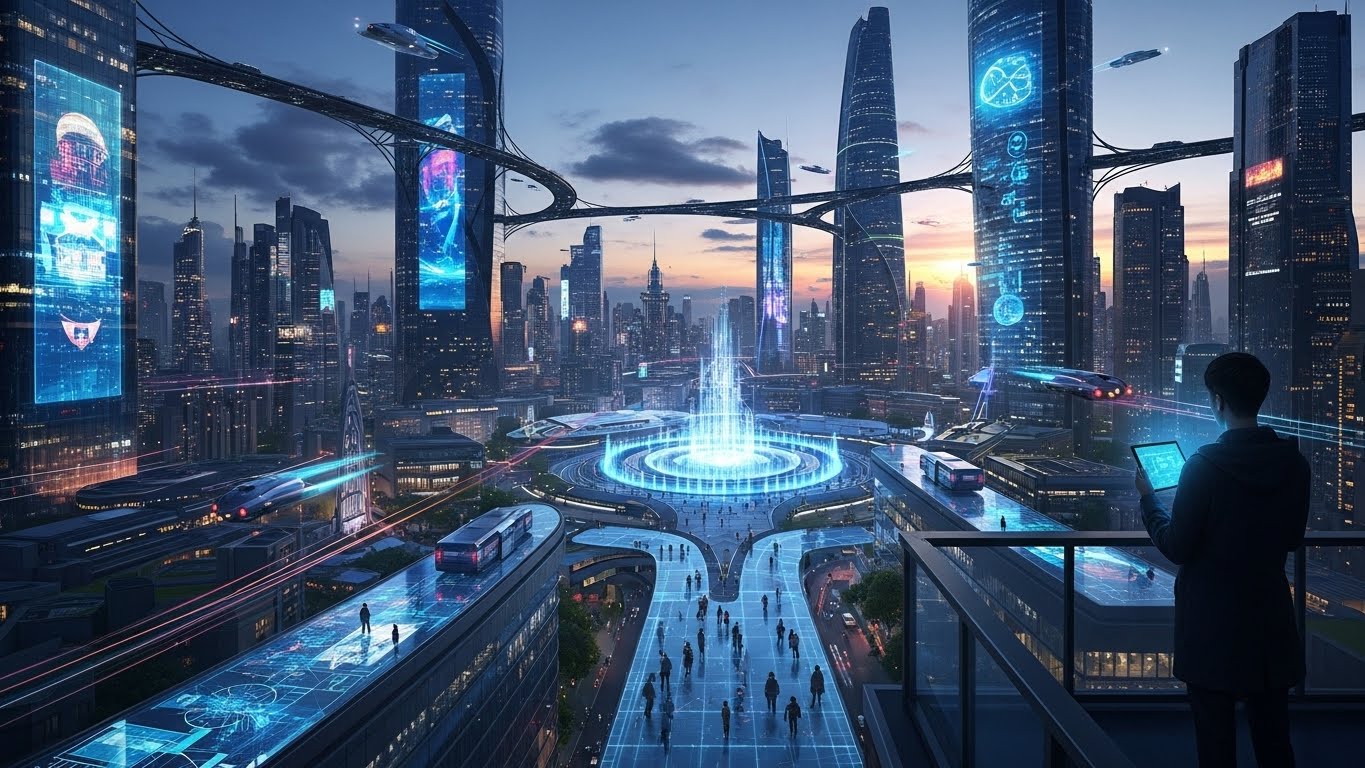

Technology is evolving at a pace that is hard to keep up with, and with each passing day, new breakthroughs emerge, pushing the boundaries of what we once thought was possible. The digital age has introduced us to mind-blowing innovations that are transforming every facet of our lives—from how we work to how we communicate and even how we experience entertainment. In this blog post, we’ll dive into some of the most exciting technological advancements, explore their impact, and look at the future that these innovations are shaping.
Artificial Intelligence: From Tools to Partners
Artificial Intelligence (AI) is arguably one of the most transformative technologies of our time. Once a mere concept in science fiction, AI has rapidly become a reality that is integrated into various sectors. From virtual assistants like Siri and Alexa to predictive analytics used by businesses to understand consumer behavior, AI is already a part of our daily lives.
But AI’s potential doesn’t stop at basic tasks. AI is beginning to evolve into systems capable of learning and adapting on their own. Machine learning, a subset of AI, is used in everything from medical diagnosis to autonomous vehicles. These AI systems can not only execute tasks with speed and precision but also make decisions based on data, improving over time. The future of AI promises even deeper integration into industries such as healthcare, finance, and education, where it could automate processes, provide personalized experiences, and even create new possibilities for human interaction.
Blockchain: Beyond Bitcoin
When most people hear the word “blockchain,” their minds immediately go to Bitcoin and other cryptocurrencies. While blockchain technology is most famous for supporting digital currencies, its true potential lies in its decentralized nature and ability to ensure secure, transparent transactions. A blockchain is a distributed ledger that records transactions across a network of computers, ensuring that no single entity has control over the data.
Beyond cryptocurrencies, blockchain is proving to be a game-changer for a variety of industries. In supply chain management, blockchain ensures that products are traceable from production to delivery, reducing fraud and increasing transparency. The technology is also making waves in the fields of healthcare, finance, and even voting systems. By providing a secure and transparent way to manage data, blockchain can fundamentally change how we handle transactions and protect sensitive information.
The Evolution of Connectivity: 5G and the Internet of Things
In today’s world, being connected is more important than ever. The advent of 5G technology promises to revolutionize connectivity by offering faster speeds, lower latency, and the ability to connect more devices simultaneously. While 4G brought us faster internet on mobile devices, 5G will enable a host of new applications, from ultra-low-latency gaming to remote surgery.
The rise of 5G is also closely linked to the growth of the Internet of Things (IoT)—the network of interconnected devices that communicate with each other and share data. From smart homes where you can control everything from your lights to your refrigerator, to wearable devices that track your health in real-time, IoT is expanding the digital ecosystem and enhancing the way we interact with the world around us.
For instance, 5G-powered IoT can make cities “smarter” by optimizing traffic patterns, improving energy efficiency, and enabling real-time communication between vehicles and infrastructure. As these technologies converge, the world will become more connected, intelligent, and responsive, driving new levels of convenience and efficiency in everyday life.
Virtual Reality and Augmented Reality: Immersive Experiences Redefined
Virtual Reality (VR) and Augmented Reality (AR) are technologies that are already redefining how we experience entertainment, education, and even social interaction. While VR immerses users in a completely virtual environment, AR overlays digital information on top of the real world. These technologies are rapidly gaining traction in sectors like gaming, healthcare, real estate, and education.
In gaming, VR has taken the experience to a whole new level by allowing players to step into fully realized, interactive worlds. With headsets like the Oculus Rift and PlayStation VR, players can look around and physically interact with the virtual world, creating a much more immersive experience. In education, VR is used for simulations and virtual classrooms, providing students with interactive learning experiences that are more engaging and effective.
On the other hand, AR is revolutionizing industries like retail and real estate. Imagine trying on clothes virtually before purchasing them, or viewing a property in real-time, enhanced with digital information about the space. From helping doctors perform surgeries to providing enhanced experiences at concerts and live events, the future of AR and VR is vast, and we’ve only just scratched the surface.
Quantum Computing: The Next Computing Revolution
Quantum computing is another exciting frontier in technology that has the potential to change the way we process information. Unlike classical computers, which use bits to represent data as either 0s or 1s, quantum computers use qubits, which can represent both 0 and 1 simultaneously. This ability to process exponentially more data at once makes quantum computing capable of solving complex problems much faster than today’s most advanced supercomputers.
One area where quantum computing could have a significant impact is in cryptography. With its ability to break traditional encryption methods, quantum computing could make current security systems obsolete—leading to the development of new, quantum-resistant encryption protocols. Additionally, quantum computing could help accelerate breakthroughs in medicine, material science, and AI by simulating molecules and chemical reactions at speeds far beyond what is currently possible.
Though we are still in the early stages of quantum computing, the implications for everything from cybersecurity to drug discovery are immense, and it could very well be one of the most important technological advancements of the next few decades.
The Future of Work: Automation and Artificial Intelligence
The future of work is being shaped by the increasing use of automation and artificial intelligence. Technologies like machine learning and robotics are already automating tasks that once required human intervention. This is especially true in industries like manufacturing, where robots are performing repetitive tasks more efficiently and accurately than humans.
In the workplace, AI is being used to streamline operations, reduce costs, and improve productivity. Customer service chatbots, automated data analysis tools, and predictive algorithms are just a few examples of how AI is transforming the way businesses operate. This shift toward automation will continue to grow, but it also raises important questions about job displacement and the future of employment.
While automation will undoubtedly change the job market, it will also create new opportunities in tech fields such as AI development, robotics, and cybersecurity. It will be crucial for workers to adapt to these changes by acquiring new skills and embracing the possibilities that these technologies present.
Sustainability Through Technology: Green Innovations
As climate change becomes an increasingly urgent global issue, technology is stepping in to help us build a more sustainable future. From clean energy solutions to smart agriculture, tech innovations are making it possible to reduce our carbon footprint and minimize the impact of human activities on the planet.
One of the most promising areas of sustainable tech is renewable energy. Solar, wind, and hydropower are becoming more efficient and cost-effective, making them viable alternatives to fossil fuels. In addition, energy storage solutions are improving, enabling us to store renewable energy for use when it’s needed most.
In agriculture, technology is helping farmers grow more food with fewer resources. Precision farming uses data analytics, IoT sensors, and AI to optimize irrigation, reduce pesticide use, and increase crop yields. In transportation, electric vehicles (EVs) are replacing gas-powered cars, contributing to cleaner air and a reduction in greenhouse gas emissions. The future of sustainability is undoubtedly tied to technology, and these innovations hold the key to a greener, more sustainable world.
Conclusion: Embracing the Tech-Driven Future
The pace at which technology is advancing is mind-boggling, and we’re only at the beginning of this digital revolution. From artificial intelligence to quantum computing and sustainability-driven innovations, the future promises to be filled with technologies that will transform how we live, work, and interact with the world. While these advancements come with their own set of challenges—such as ethical concerns, job displacement, and privacy issues—the potential for positive change is enormous.
By embracing these innovations and adapting to the changing landscape, we can unlock new possibilities that improve our quality of life and solve some of the most pressing challenges facing humanity. The future of technology is bright, and the journey ahead is bound to be nothing short of exciting.