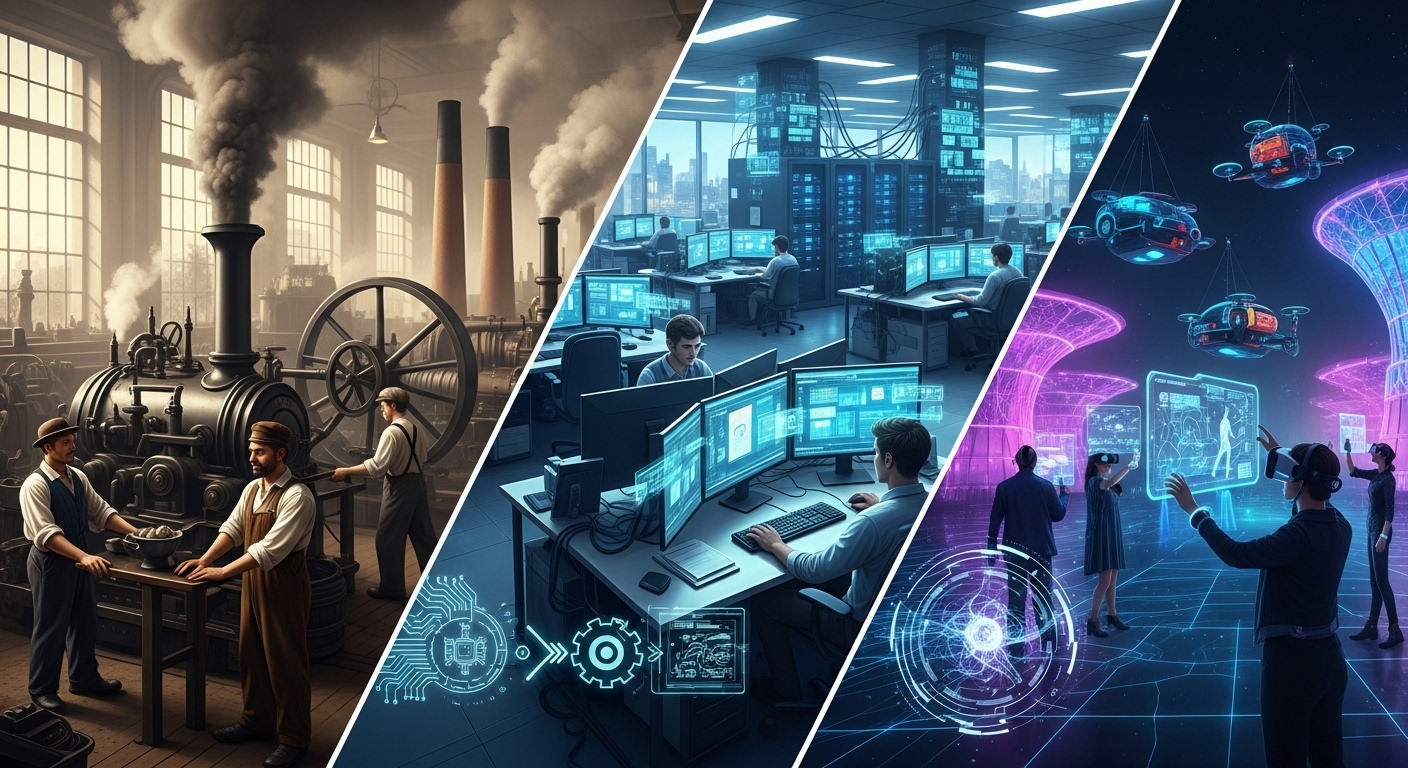
Technology is one of the most dynamic forces shaping the modern world. It is impossible to deny how deeply ingrained tech has become in our everyday lives, influencing everything from the way we communicate to the way we work, shop, and even think. With every passing year, there seems to be a new breakthrough or revolutionary development that alters the landscape of technology. In this blog post, we’ll explore the current state of technology and highlight some of the most exciting innovations that are set to transform the world as we know it.
The Rise of Artificial Intelligence: Beyond Automation
Artificial Intelligence (AI) has steadily grown from a theoretical concept to a practical, indispensable part of modern technology. AI systems today can process vast amounts of data in real-time, learn from it, and make decisions autonomously. This has led to improvements in many sectors, including healthcare, finance, and even entertainment.
AI is also powering innovations such as natural language processing (NLP), which allows machines to understand and generate human language. This has paved the way for intelligent virtual assistants, like Siri and Alexa, to interact with users in increasingly sophisticated ways. But AI’s potential goes far beyond virtual assistants. In healthcare, AI is being used to analyze medical images, predict disease outbreaks, and personalize treatment plans. In finance, AI models are used to predict stock market trends and optimize investment portfolios.
However, the widespread adoption of AI also raises important ethical questions. As AI becomes more integrated into society, concerns about job displacement, data privacy, and the potential for biased algorithms are gaining prominence. Policymakers, researchers, and companies will need to work together to ensure that AI is developed and implemented in ways that benefit society as a whole.
5G and the Internet of Things: A Connected World
One of the most anticipated technological advancements is the rollout of 5G networks. The fifth-generation wireless technology promises to deliver lightning-fast internet speeds, low latency, and the ability to connect a massive number of devices simultaneously. This will open up new possibilities for the Internet of Things (IoT), a network of interconnected devices that can communicate with each other and exchange data.
5G will enable a seamless IoT ecosystem, where everything from household appliances to medical devices to entire cities will be interconnected. Imagine a smart home where your refrigerator automatically orders groceries when supplies run low, your car autonomously drives you to work, and your wearable health monitor sends real-time data to your doctor. This level of connectivity will increase efficiency, reduce costs, and improve the overall quality of life.
However, the transition to 5G and the expansion of IoT will also come with its challenges. The infrastructure required for 5G networks is expensive, and there are concerns about the security and privacy implications of a more connected world. With so many devices collecting and transmitting data, ensuring that this information is secure from hackers and malicious actors will be a significant concern.
The Quantum Leap: How Quantum Computing is Changing the Game
When we talk about the future of technology, quantum computing often comes up as a major point of interest. Quantum computers are fundamentally different from traditional computers, using quantum bits (qubits) that can exist in multiple states simultaneously, rather than just ones and zeros. This allows quantum computers to perform certain calculations much faster than classical computers.
Quantum computing holds the potential to solve problems that are currently beyond the reach of even the most powerful supercomputers. For example, it could revolutionize fields such as cryptography, drug discovery, and climate modeling. In cryptography, quantum computers could potentially break the encryption methods that secure much of the internet today, leading to the development of new, quantum-resistant encryption techniques.
While quantum computing is still in its early stages, advancements are being made. Major tech companies like IBM, Google, and Microsoft are investing heavily in quantum research, and quantum processors are being developed with increasing power and stability. As this technology matures, it could open up entirely new possibilities for industries ranging from healthcare to finance to logistics.
Blockchain Beyond Cryptocurrency: A Revolution in Trust
When most people think of blockchain, they immediately think of Bitcoin or other cryptocurrencies. However, the potential of blockchain technology goes far beyond digital currencies. Blockchain is essentially a decentralized, transparent ledger that can securely record transactions across a network of computers. This creates an immutable record of data that cannot be altered or tampered with, making it an incredibly powerful tool for securing and verifying transactions.
One of the most exciting applications of blockchain is in supply chain management. With blockchain, companies can track the journey of goods from origin to consumer, ensuring transparency, reducing fraud, and improving efficiency. Blockchain is also being explored for use in voting systems, where it could provide a secure and transparent way to cast and count votes, reducing the risk of election fraud.
Another area where blockchain could have a significant impact is in digital identity management. Today, managing our digital identity across various platforms is often cumbersome and insecure. Blockchain could provide a decentralized, secure way for individuals to own and control their digital identities, ensuring that only authorized parties have access to personal information.
Augmented Reality (AR) and Virtual Reality (VR): Redefining the Human Experience
Augmented Reality (AR) and Virtual Reality (VR) are two technologies that have been making waves in the entertainment and gaming industries. However, their potential extends far beyond just fun and games. AR and VR are already being used in fields such as education, healthcare, and architecture to create immersive, interactive experiences.
In education, AR and VR are being used to create virtual classrooms and interactive learning environments. Students can explore historical landmarks in VR or use AR to interact with 3D models of the human body, bringing textbook material to life in new and exciting ways. In healthcare, VR is being used for pain management, physical therapy, and even surgical training, providing medical professionals with realistic simulations to improve their skills.
The future of AR and VR is incredibly exciting. As the technology improves, we can expect more seamless and immersive experiences. The ability to overlay digital information onto the physical world (AR) or transport ourselves to entirely new environments (VR) could revolutionize everything from remote work to social interaction, education, and even therapy.
The Ethics of Emerging Technologies: Navigating the Moral Dilemmas
As technological advancements continue to accelerate, we are faced with new ethical dilemmas that require careful consideration. One of the most pressing concerns is the impact of automation and AI on employment. While automation has the potential to increase efficiency and reduce costs, it also threatens to displace millions of workers across various industries. Governments, businesses, and educational institutions will need to collaborate on strategies to reskill workers and ensure that the benefits of automation are shared equitably.
Another ethical challenge is the growing power of big tech companies. As companies like Google, Amazon, and Facebook continue to expand their influence, questions about data privacy, monopolistic behavior, and the concentration of power in the hands of a few tech giants are becoming more urgent. Consumers and regulators will need to push for stronger protections for personal data and a more balanced digital ecosystem.
The ethical use of emerging technologies such as AI, facial recognition, and genetic engineering will require clear guidelines and regulations to ensure that they are used for the benefit of society. This will require ongoing dialogue between technologists, ethicists, policymakers, and the public to ensure that the rapid pace of innovation doesn’t outstrip our ability to understand and manage its consequences.
Conclusion: Embracing the Future of Technology
The future of technology is full of promise, and the innovations we are seeing today are just the beginning. From AI and 5G to quantum computing and blockchain, the possibilities are endless. However, with these advancements come challenges—ethical dilemmas, security concerns, and the need for new regulations. It’s up to all of us—technologists, policymakers, businesses, and consumers—to shape the future in a way that benefits everyone.
As we continue to push the boundaries of what is possible, one thing is clear: technology will continue to evolve at a rapid pace, transforming our world in ways we can’t even fully imagine. By embracing these innovations responsibly, we can create a future that is not only more efficient and connected but also more inclusive, sustainable, and equitable for all. The future is now, and it’s up to us to navigate it wisely.