Introduction
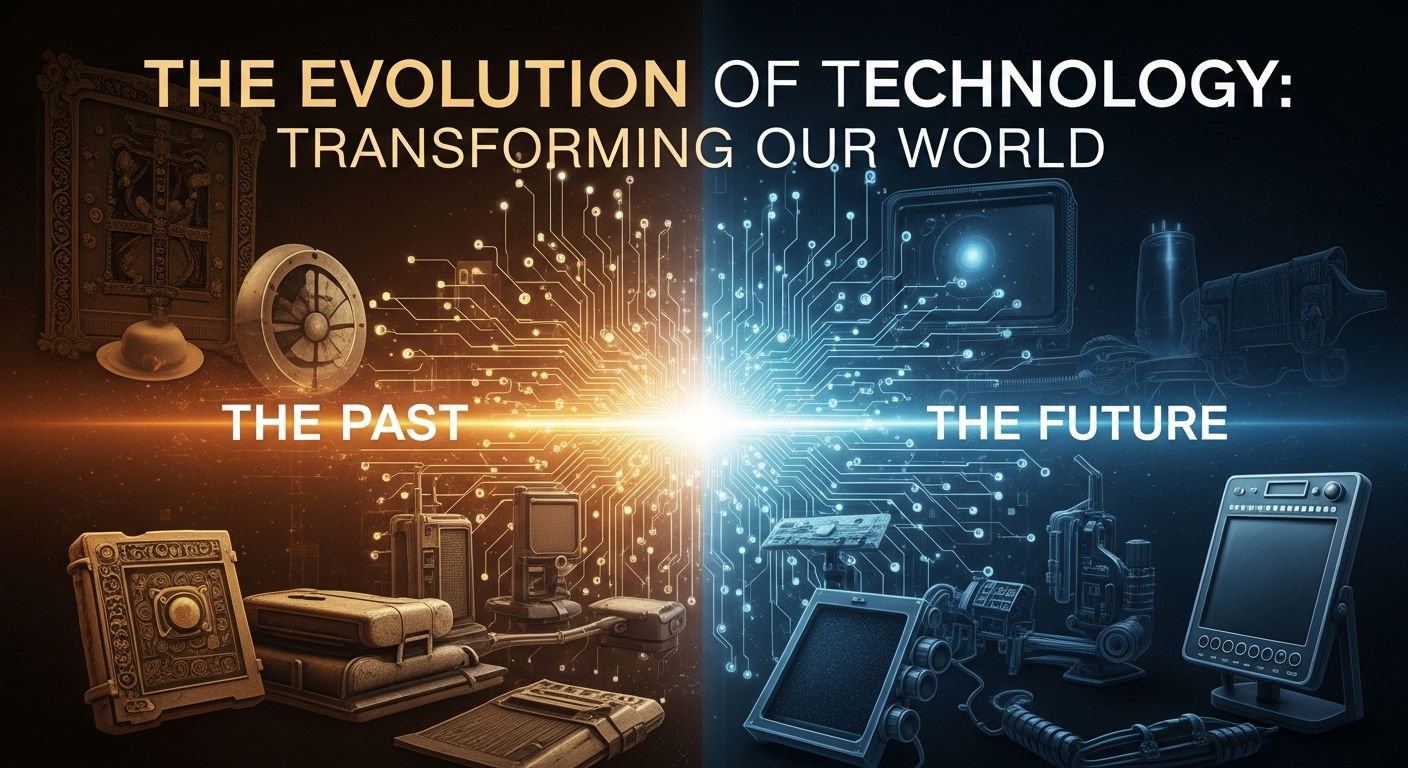
Technology is evolving at a pace never seen before. We are living through an age where the boundaries of what is possible seem to be continuously shifting. Innovations in artificial intelligence (AI), machine learning, blockchain, virtual reality (VR), and the Internet of Things (IoT) are not just advancing technology, but also transforming how we work, live, and interact with each other. These technologies hold immense potential to improve lives, solve complex global challenges, and redefine entire industries. However, with rapid progress comes the need for understanding, adaptation, and responsibility. This blog explores how emerging technologies are shaping the world, their potential impact on society, and the challenges they present.
The Rise of Artificial Intelligence
Artificial intelligence (AI) is undoubtedly one of the most impactful technological advancements of our time. What was once the stuff of science fiction is now becoming an integral part of our daily lives. AI, at its core, refers to systems or machines designed to mimic human cognitive functions, including learning, problem-solving, and decision-making. Machine learning, a subset of AI, is enabling systems to improve their performance by learning from data without explicit programming.
1. AI in Healthcare
AI’s potential in healthcare is staggering. From diagnostic tools to personalized treatment plans, AI is changing the landscape of medicine. For example, machine learning algorithms can analyze vast amounts of medical data and identify patterns that may go unnoticed by human doctors. This allows for early detection of diseases such as cancer, heart disease, and even rare genetic disorders. AI-powered imaging tools are now being used to interpret medical scans, like MRIs and X-rays, with a level of accuracy that rivals that of human specialists.
In addition to diagnostics, AI is revolutionizing patient care. Personalized medicine, which tailors treatment to an individual’s genetic makeup and health data, is becoming more feasible thanks to AI-driven analysis. With the help of AI, doctors can make more informed decisions, leading to better patient outcomes and potentially saving lives.
2. AI in Business
In the business world, AI is transforming everything from customer service to supply chain management. AI-powered chatbots are now commonplace in customer service, providing 24/7 assistance to customers and resolving issues more quickly and efficiently. These chatbots are not just answering questions—they are learning from past interactions to provide more accurate and personalized responses.
In addition, AI is enhancing decision-making in business. Machine learning algorithms are helping companies predict trends, optimize operations, and make data-driven decisions. Whether it’s using predictive analytics to forecast sales or applying AI to improve inventory management, businesses are becoming more efficient and adaptive to market changes.
3. AI and Automation
Automation, powered by AI, is one of the most disruptive trends across industries. In manufacturing, for example, robots equipped with AI can perform repetitive tasks with incredible speed and precision, improving productivity while reducing human error. These robots are increasingly capable of learning and adapting to new tasks, which allows for greater flexibility and efficiency in production lines.
In the service sector, automation is also making waves. AI-driven systems are performing tasks that traditionally required human labor, such as data entry, basic customer support, and even content creation. While this opens up new opportunities for businesses, it also raises important questions about the future of work and the need for workers to acquire new skills in an AI-driven economy.
Blockchain: Beyond Cryptocurrencies
Blockchain technology, first introduced as the underlying framework for cryptocurrencies like Bitcoin, has evolved into a powerful tool with applications far beyond digital currencies. At its core, blockchain is a decentralized digital ledger that records transactions in a secure, transparent, and tamper-proof way. The technology relies on a network of computers (or nodes) to verify transactions, ensuring that they are legitimate without the need for intermediaries like banks or government institutions.
1. Blockchain in Finance
Blockchain’s most well-known application is in the financial sector, where it is transforming how transactions are conducted. Cryptocurrencies, such as Bitcoin and Ethereum, use blockchain to enable peer-to-peer transactions without the need for banks or financial institutions. This has the potential to reduce transaction costs and increase financial inclusion, particularly for people in underserved or unbanked regions of the world.
Beyond cryptocurrencies, blockchain is also making its mark in traditional finance. For example, banks are using blockchain to streamline cross-border payments, reduce fraud, and improve transparency. Blockchain allows for faster and more secure transactions, reducing the time it takes to settle payments and making financial systems more efficient.
2. Blockchain in Supply Chain Management
One of the most promising applications of blockchain outside of finance is in supply chain management. Blockchain enables businesses to track the origin and journey of products as they move through the supply chain, creating a transparent and immutable record of each transaction. This is particularly valuable in industries where trust and transparency are critical, such as food safety, pharmaceuticals, and luxury goods.
For instance, blockchain is being used to trace the journey of food products from farm to table. This can help prevent fraud, ensure quality standards, and allow consumers to know exactly where their food is coming from. In the pharmaceutical industry, blockchain is being used to track the authenticity of drugs, preventing counterfeit products from entering the market.
Virtual Reality and Augmented Reality: Changing How We Experience the World
Virtual reality (VR) and augmented reality (AR) are two technologies that are fundamentally changing how we interact with the world. While VR immerses users in a completely digital environment, AR overlays digital content onto the physical world, enhancing the user’s experience. Both VR and AR have a wide range of applications, from gaming and entertainment to education and healthcare.
1. VR and AR in Gaming
In the gaming industry, VR and AR are creating immersive experiences that were previously unimaginable. Virtual reality gaming allows players to step inside a game, interacting with a 3D world and experiencing a level of immersion that traditional gaming consoles cannot offer. With VR headsets like the Oculus Rift and PlayStation VR, players can physically move around and interact with their environment in real-time, making gaming more engaging and lifelike.
Augmented reality, on the other hand, is transforming mobile gaming. Games like Pokémon Go have made AR a mainstream technology, where players use their smartphones to interact with virtual characters overlaid onto the real world. AR is also being used in gaming to create interactive experiences that blend the physical and digital worlds.
2. VR and AR in Education and Training
Beyond entertainment, VR and AR have the potential to revolutionize education and training. In education, VR can transport students to historical events, far-off locations, or even the inside of the human body, providing an interactive and immersive learning experience. This type of experiential learning can enhance engagement, improve retention, and make complex subjects easier to understand.
For professional training, VR is being used in fields such as medicine, aviation, and military operations. Medical students can practice surgeries in a risk-free VR environment, while pilots can simulate flights to gain hands-on experience before stepping into an actual cockpit. In these high-stakes fields, VR training allows for repetition and practice without the risk of harm.
3. AR and Healthcare
Augmented reality is also making waves in healthcare, particularly in surgery and diagnostics. Surgeons can use AR to overlay digital information, such as 3D scans of organs or bones, onto a patient’s body, allowing for more precise and accurate operations. AR is also being used to guide medical professionals through procedures, improving outcomes and reducing the risk of error.
For patient care, AR is helping with rehabilitation by providing interactive exercises and feedback. Patients recovering from injuries or surgeries can engage with AR programs that guide them through physical therapy routines, making the process more engaging and less painful.
The Internet of Things: Connecting the World
The Internet of Things (IoT) refers to the network of physical devices—such as appliances, vehicles, sensors, and even clothing—that are embedded with sensors and connected to the internet. These devices can communicate with each other and share data, creating a more connected and intelligent world.
1. Smart Homes and Cities
One of the most visible applications of IoT is in the development of smart homes. Devices like smart thermostats, lights, and security cameras can be controlled remotely via smartphones or voice assistants like Amazon Alexa and Google Assistant. These devices are designed to learn from user behavior, providing convenience, energy savings, and enhanced security.
On a larger scale, IoT is being used to build smart cities. In a smart city, IoT devices are used to monitor traffic patterns, optimize waste management, reduce energy consumption, and improve public safety. For example, smart traffic lights can adjust to real-time traffic conditions, reducing congestion and improving flow. In smart buildings, IoT systems can automatically adjust lighting and temperature based on occupancy, saving energy and costs.
2. IoT in Healthcare
The healthcare industry is also benefiting from the Internet of Things. Wearable devices like fitness trackers, heart monitors, and glucose meters are gathering real-time data about a patient’s health and sending it to healthcare providers. This enables doctors to monitor patients remotely, detect potential issues early, and personalize treatment plans.
In hospitals, IoT devices are being used to track equipment, monitor patient vitals, and manage inventory. This improves efficiency, reduces waste, and ensures that medical staff have the tools they need when they need them.
Conclusion
The rapid pace of technological innovation is fundamentally transforming the world we live in. From artificial intelligence and blockchain to virtual reality and the Internet of Things, these emerging technologies are not only enhancing industries but also reshaping the way we interact with each other and the environment. While the possibilities are exciting, it is also important to consider the ethical, social, and economic implications of these technologies. As we move forward, we must embrace these advancements responsibly, ensuring that they are used to benefit society as a whole and contribute to a better, more connected