
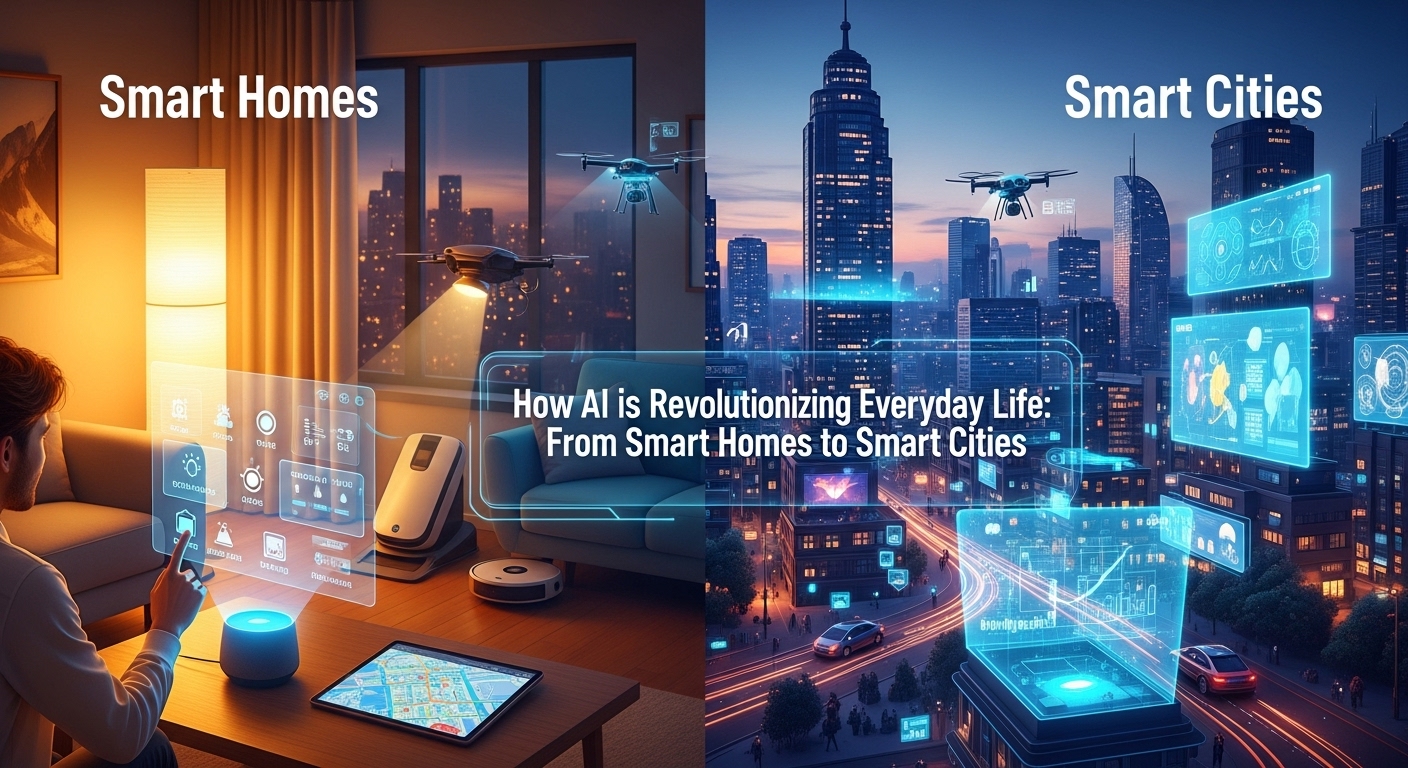
Artificial Intelligence (AI) is no longer a futuristic concept; it’s deeply woven into the fabric of our daily lives. From the moment we wake up to the time we go to bed, AI influences how we interact with technology, enhancing convenience, safety, and efficiency. The transformation is visible in two major arenas: our homes and our cities. Let’s explore how AI is reshaping everyday life — making our homes smarter and our cities more intelligent.
Smart Homes: Personalized Comfort and Convenience
AI-powered smart home devices have become household staples. Voice assistants like Alexa, Google Assistant, and Siri make controlling lights, thermostats, and entertainment systems effortless. These devices learn from our habits, enabling automation that anticipates our needs. For example, smart thermostats adjust the temperature based on your daily schedule, reducing energy consumption and saving money.
Security systems equipped with AI can distinguish between family members, visitors, and potential intruders, reducing false alarms. Smart cameras and sensors can notify homeowners instantly about unusual activity, offering peace of mind even when away.
Kitchen appliances have also gotten smarter. AI-enabled refrigerators can track expiration dates and suggest recipes based on what’s inside, while robotic vacuum cleaners map your home and clean efficiently without supervision. AI integrates with these devices to create a seamless and personalized living environment that adapts as your lifestyle changes.
Smart Cities: Enhancing Urban Life at Scale
On a much larger scale, AI is helping cities operate more efficiently and sustainably. Smart city initiatives leverage AI to optimize traffic flow, reducing congestion and lowering pollution. AI-powered traffic lights adjust in real-time based on vehicle and pedestrian movement, cutting down wait times and improving road safety.
Public transportation systems benefit from AI by predicting peak times and adjusting schedules accordingly. This improves the commuter experience and encourages more people to use public transit, which reduces the carbon footprint.
Waste management is another area where AI plays a crucial role. Sensors in trash bins can signal when they’re full, allowing collection routes to be optimized and resources to be used more efficiently.
AI also helps city planners analyze data from multiple sources — including social media, weather patterns, and infrastructure use — to make informed decisions about future developments. This results in better allocation of resources, improved public services, and smarter urban growth.
The Bigger Picture: AI as a Catalyst for Sustainability and Inclusion
Beyond convenience and efficiency, AI has the potential to tackle some of society’s most pressing challenges. Smart homes reduce energy waste, contributing to lower carbon emissions. Smart cities manage resources more wisely, improving quality of life while minimizing environmental impact.
Moreover, AI-driven accessibility tools are making daily life easier for people with disabilities. Voice recognition, real-time translation, and assistive technologies are breaking down barriers and fostering greater inclusion.
Conclusion
The revolution brought by AI is not limited to high-tech labs or sci-fi scenarios. It’s happening in the homes we live in and the cities we navigate every day. By seamlessly integrating AI into our environments, we’re unlocking new levels of comfort, safety, and sustainability. As technology continues to evolve, the impact of AI on everyday life will only deepen — transforming the way we live, work, and interact in ways we are only beginning to imagine.