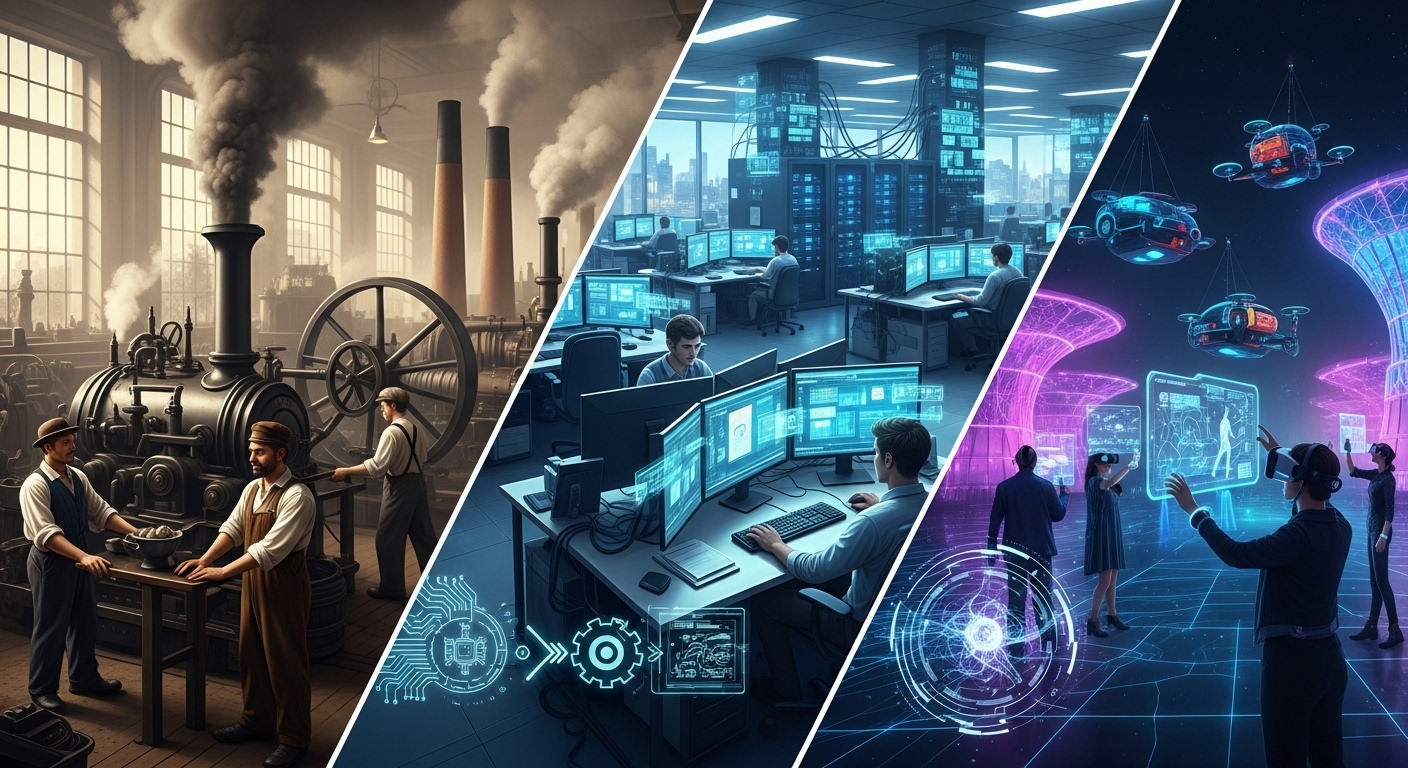

Technology is transforming every aspect of our lives in ways we never thought possible. From the way we communicate to how we work, learn, and even live, the digital age has brought both challenges and unprecedented opportunities. As new innovations continue to emerge, it’s becoming clear that the future will be defined by groundbreaking technologies that offer solutions to problems that were once deemed insurmountable. In this blog post, we’ll explore some of the most exciting advancements in technology and how they are changing the world we live in.
Artificial Intelligence: From Concept to Reality
Artificial Intelligence (AI) is no longer a concept confined to science fiction. It’s here, and it’s making a profound impact. AI refers to systems or machines that can perform tasks that typically require human intelligence, such as learning, problem-solving, and decision-making. Thanks to deep learning and natural language processing, AI is evolving quickly, becoming more sophisticated, and increasingly integrated into our daily lives.
AI is already playing a major role in industries like healthcare, where it aids in diagnosis, predicts patient outcomes, and helps develop new treatments. In finance, AI is used to detect fraud, optimize investment strategies, and automate customer service. As AI becomes more advanced, we can expect to see even more innovative applications, such as fully autonomous vehicles, personalized education, and smart cities that respond to the needs of their inhabitants.
Blockchain: Revolutionizing Trust and Security
Blockchain is a technology that has gained significant attention in recent years, largely due to its association with cryptocurrencies like Bitcoin and Ethereum. However, its applications extend far beyond digital currencies. Blockchain is essentially a decentralized, secure ledger that records transactions across multiple computers, making it nearly impossible to alter or tamper with.
This technology is reshaping the way businesses and individuals handle data. In supply chain management, for example, blockchain ensures transparency and traceability, allowing companies to verify the authenticity of products and ensure ethical sourcing. In healthcare, blockchain can securely store patient data, giving individuals control over their personal information. As blockchain continues to evolve, it promises to redefine trust in industries ranging from finance to voting systems, healthcare, and even the arts.
The Rise of 5G: A New Era of Connectivity
We’ve all heard about 5G, the next generation of wireless technology, but what does it mean for us? 5G promises speeds up to 100 times faster than 4G, with significantly lower latency. This breakthrough technology will enable seamless connectivity for a new generation of devices and technologies, from smart homes to autonomous vehicles.
5G’s potential extends beyond faster download speeds. It will unlock the power of the Internet of Things (IoT) by enabling billions of devices to connect and communicate in real-time. Industries like healthcare, entertainment, and manufacturing stand to benefit greatly. For instance, remote surgeries, which require high-definition video and instant communication, will become a reality with 5G. It will also drive innovations in augmented reality (AR) and virtual reality (VR), creating new immersive experiences for users.
Quantum Computing: Pushing the Boundaries of Problem-Solving
Quantum computing is one of the most exciting frontiers in technology today. Unlike traditional computers that use binary bits (0s and 1s), quantum computers use quantum bits or qubits, which can exist in multiple states at once. This enables quantum computers to solve complex problems much faster than their classical counterparts.
While quantum computing is still in its early stages, its potential is vast. It could revolutionize industries by solving problems that are currently beyond the capabilities of today’s supercomputers. In fields like cryptography, quantum computers could break traditional encryption methods, prompting a new wave of cybersecurity. In healthcare, quantum computing might help simulate complex molecular structures, speeding up drug discovery and enabling personalized medicine. Though quantum computing may take time to mature, its long-term impact could be transformative.
The Internet of Things: Connecting Everything, Everywhere
The Internet of Things (IoT) refers to the growing network of physical devices connected to the internet. These devices—ranging from smart thermostats and refrigerators to wearables and industrial machines—collect and share data, making them “smart” and able to perform tasks autonomously.
IoT is already making our homes smarter with connected appliances that can be controlled remotely. It’s improving efficiency in industries like agriculture, where sensors monitor soil conditions, weather patterns, and crop health. In healthcare, IoT devices can monitor patients in real-time, improving care and reducing hospital visits. As more devices become interconnected, the IoT ecosystem will continue to expand, offering new opportunities for automation, data collection, and personalized experiences.
Virtual Reality and Augmented Reality: Blurring the Lines Between Digital and Physical Worlds
Virtual reality (VR) and augmented reality (AR) are technologies that create immersive experiences by altering how we interact with the world. VR transports users to entirely new digital environments, while AR overlays digital information on the physical world. Both are already revolutionizing industries like entertainment, education, and healthcare.
In entertainment, VR offers an immersive experience for gaming, movies, and live events, allowing users to step into new worlds and interact with characters in ways that were once impossible. AR, on the other hand, enhances real-world experiences, such as using smartphones to get directions or interact with objects in a museum. In healthcare, VR is being used for therapeutic purposes, including pain management and exposure therapy, while AR is being used in surgery to provide real-time, 3D visualizations.
Robotics: Transforming Work and Daily Life
Robots have evolved significantly over the past few decades, moving from factory floors to homes and offices. These machines can perform tasks ranging from simple chores like vacuuming and lawn mowing to complex operations such as manufacturing, medical surgeries, and logistics.
The future of robotics lies in collaboration between humans and machines. Collaborative robots, or cobots, are designed to work alongside human workers, enhancing productivity and safety in industries like manufacturing and logistics. In healthcare, robots are already assisting with surgeries, helping with rehabilitation, and even providing companionship to patients. As robotic technology becomes more advanced, we can expect to see more integration into everyday life, creating smarter, more efficient environments.
Sustainable Tech: Innovation for a Greener Future
As climate change becomes an ever-pressing concern, sustainable technology is gaining traction. From renewable energy solutions like solar and wind power to energy-efficient devices and green data centers, technology is playing a vital role in addressing environmental challenges.
Electric vehicles (EVs) are leading the charge in reducing greenhouse gas emissions, with more automakers investing in clean energy-powered transportation. Smart grids, which use IoT and AI to optimize energy distribution, are making it easier to manage and reduce energy consumption. Additionally, sustainable practices like recycling and upcycling are being facilitated by technology, making it easier for individuals and businesses to minimize waste and reduce their carbon footprint.
The Human Factor: Ethical Considerations in Tech
As technology continues to advance, it’s essential to consider the ethical implications of these innovations. With AI making decisions, robots interacting with people, and data being collected at an unprecedented scale, questions around privacy, security, and accountability have become more urgent.
Ethical considerations in AI, for example, involve ensuring that algorithms are transparent and free from bias, while quantum computing raises concerns about the future of digital security. As new technologies continue to emerge, it’s important to have open conversations about their impact on society and ensure that they are developed and deployed responsibly.
Conclusion: The Endless Possibilities of Tomorrow’s Technology
We are living in an exciting time where technology is evolving at an exponential rate. The innovations discussed in this blog are just the tip of the iceberg. As AI, blockchain, quantum computing, and other emerging technologies continue to develop, the future holds endless possibilities. However, as we embrace these advancements, it’s crucial to remain mindful of their potential societal impact. With the right approach, these technologies have the power to improve lives, solve global challenges, and usher in a new era of progress and innovation. The future is bright, and it’s being shaped by the tech we develop today.